
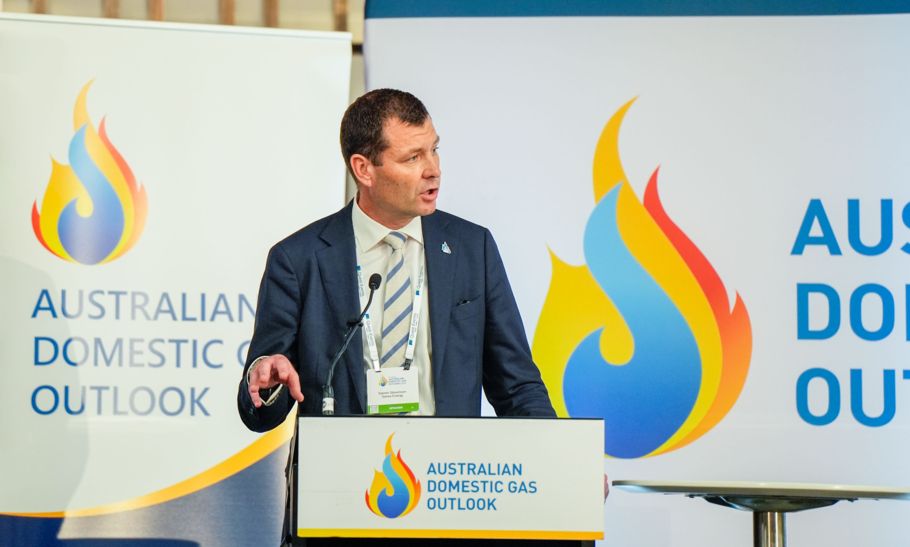
(Senex Energy CEO Darren Stevenson presenting at the Australian Domestic Gas Outlook Conference March 2026)
Senex Energy Chief Executive Darren Stevenson addressed the Australian Domestic Gas Outlook (ADGO) conference in Sydney, speaking to the National Gas Market Review and what the industry needs to deliver more gas for Australian homes and businesses.
The cost of distorting the market
Senex understands the intent behind an east coast gas reservation policy: a requirement that a portion of gas produced in Australia is set aside for domestic use before any surplus can be exported. Governments want reliable, affordable supply for households and businesses, and that is a goal we all share.
But a policy designed to ‘oversupply’ the domestic market risks undermining the very price signal that drives long-term investment. When that signal is distorted, new capital stops flowing.
At Senex, we paused a major expansion project because regulatory uncertainty made it impossible to responsibly commit that capital. That recent delay increased costs and slowed new supply to the domestic market.
A poorly designed reservation framework risks repeating that outcome at scale, with the heaviest impact falling on the smaller, domestic-focused producers like Senex, who provide the competition the market needs.
We have a development problem
Australia has tens of thousands of petajoules of gas in the ground, more than enough to meet domestic and export needs. The challenge is getting it out of the ground and into the market.
New South Wales and Victoria are home to the country’s largest industrial gas users and hold significant reserves, yet that gas stays in the ground for contested approvals and bans. Asking Queensland and other producers to carry the investment risk and development burden while others don’t develop their own resources is not a long-term solution.
More affordable gas comes from developing what is there. That means faster approvals, better access to undeveloped acreage and a commitment to back the investment needed to bring new supply to market.
Energy security starts at home
This also matters beyond our borders. In 2024, Australia exported 11.4 million tonnes of LNG to South Korea and imported a similar volume of refined petroleum products in return. That energy interdependence is a strategic asset, and unpredictable domestic policy settings put it at risk.
Global energy markets are being reshaped by geopolitical uncertainty and supply chains that once seemed secure are being tested. South Korea and partners like it rely on us as we rely on them, and Australia must be a dependable supplier if it expects dependability in return.
Proof it can be done
Senex has shown what good policy can deliver. We invested under Queensland’s Australian Market Supply Conditions, which require gas to be sold to the domestic market only, creating a protected supply chain from the ground to the end user. We worked through the approvals process and have supplied gas to the domestic market since 2019.
We stand ready to do more, but we can only do so in a policy environment that supports investment. If Australia gets this right, we can secure reliable domestic supply and maintain a strong export sector. If we get it wrong, we risk undermining both. That would be a tragedy for this great and lucky country that we all love dearly.
Download CEO Darren Stevenson’s Speech